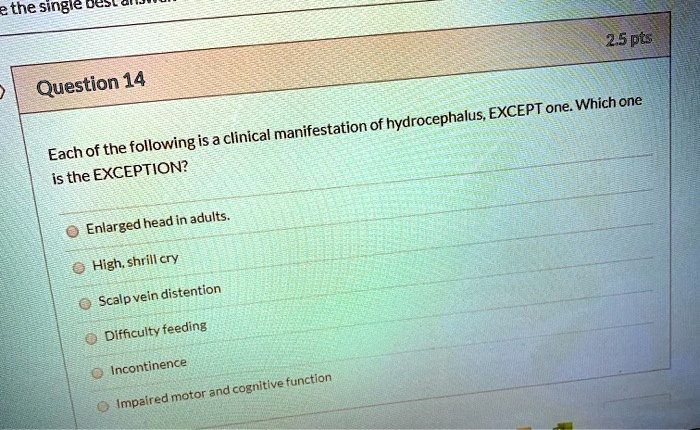
Clinical Manifestations of Hydrocephalus Which one of the following is NOT a clinical manifestation of hydrocephalus? a) Enlarged head in adults b) High shrill cry c) Scalp vein distention d) Difficulty feeding e) Incontinence f) Impaired cognitive function and motor skills
The Correct Answer and Explanation is:
The correct answer is a) Enlarged head in adults.
Hydrocephalus is a condition characterized by excessive accumulation of cerebrospinal fluid within the brain’s ventricular system, leading to increased intracranial pressure. The clinical manifestations vary depending on the patient’s age and the underlying cause.
In infants and young children, the skull bones are not yet fully fused, allowing for expansion in response to increased fluid volume. This often results in an enlarged head, a hallmark sign of pediatric hydrocephalus. However, in adults, the skull is fully developed and rigid, meaning head enlargement does not occur. Instead, adult hydrocephalus presents with symptoms related to elevated intracranial pressure, such as headaches, nausea, vomiting, visual disturbances, gait abnormalities, and cognitive impairment.
The other options listed in the question are recognized clinical manifestations of hydrocephalus. A high-pitched, shrill cry is commonly observed in infants, indicative of neurological distress. Scalp vein distention occurs due to increased pressure affecting venous circulation. Difficulty feeding is often seen in infants with hydrocephalus, as neurological impairment disrupts normal swallowing and sucking reflexes. Incontinence is a feature of normal-pressure hydrocephalus, commonly affecting older adults by disrupting bladder control mechanisms. Impairments in cognitive function and motor skills arise due to sustained pressure on brain structures, leading to progressive decline in neurological function.
Thus, while head enlargement is a classic sign of hydrocephalus in infants, it is not seen in adults, making option a the correct choice. Understanding the differences in clinical presentations across age groups is crucial for accurate diagnosis and timely intervention.